Run a Dance Studio Competitions Guide – How to Enter and Prepare
Quick answer
How to prepare for competitions in Run a Dance Studio without relying on unverified reward claims.
How Competitions Work
Public snippets say competitions can earn Cash and Gems, so treat them as a progression checkpoint. The safest launch approach is to enter after you understand routine creation and can judge whether a failed run came from weak preparation or unfamiliar rules.
How to Enter and Prepare
- Build or update your studio enough to access the competition path shown in-game.
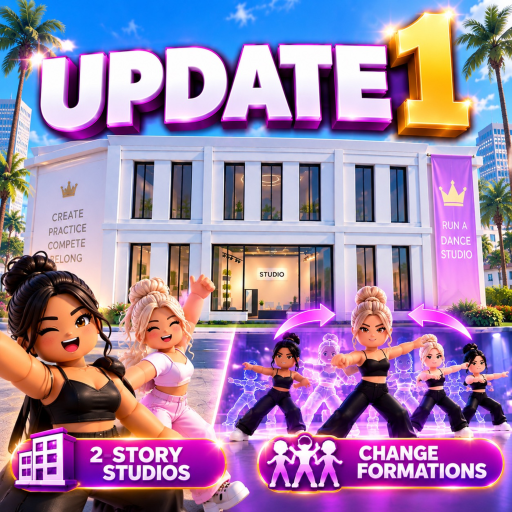
- Create a routine with dancers, music, formations, and moves.
- Run an early competition attempt to learn what feedback the game gives.
- Record rewards only from your live result screen or a dated official source.
- Return to Cash and Gems after each attempt to decide whether packs or upgrades are the better next action.
What Score and Rewards Are Confirmed?
The public evidence confirms competitions as a progression and reward activity, but not a scoring formula, fixed threshold, bracket, or reward amount. Record those details only from a dated result screen or official source.
Failure Modes
The biggest risk is overreading public snippets. They confirm that competitions matter, but they do not prove exact score formulas, brackets, or reward amounts. This page avoids invented thresholds until live capture supports them.
FAQ
Are competitions required?
Public evidence positions competitions as a major win-and-reward activity, but the exact requirements must be checked in the live game.
What should I do after losing?
Review the routine components first, then decide whether resource spending or a simpler routine change is the next test.
Source Notes
This page uses public evidence collected on September 7, 2026: the official Roblox experience page for Run a Dance Studio by Dance Interactive, Creator Exchange's public game record, Roblox's universe game-pass API, and public official-social snippets surfaced in search results. Exact rates, hidden requirements, and menu positions can change after updates, so any step that depends on a live in-game menu is written as a check rather than a fixed claim.
Practical Verification Routine
Before acting on a claim from a comment, short video, or copied wiki page, compare it with what the current Roblox client shows. Join the experience from the official listing, open the relevant menu, and check whether the words on this page still match the live interface. If the live game shows different wording, the live game wins and the page should be rechecked.
For launch players, the best use of this guide is sequencing. Start with a low-risk action, observe the result, and only then spend Cash, Gems, Robux, or time on a repeated strategy. This is especially important for Run a Dance Studio because public evidence confirms the broad systems but not exact rates, hidden score formulas, or every unlock requirement.
Evidence Boundary
Confirmed public facts include the Roblox experience identity, Dance Interactive as the creator line, simulation-style public metadata, no confirmed working code row during the September 7, 2026 pass, the visible Roblox gamepass rows, and official-social snippets about building, designing, training, routines, competitions, Cash, Gems, packs, dancers, songs, costumes, and teachers. Anything beyond that should be treated as a live-game observation target, not a fixed published value.
Player Decision Checklist
Use this page when you are about to make a decision that costs time, currency, or Robux. If the next step only teaches the interface, try it freely. If it asks for a purchase, repeated competition entries, or a pack opening, pause long enough to confirm the current wording in the game. A reliable launch guide should help you avoid bad assumptions, not pressure you into copying a claim that may have changed after an update.
When new evidence appears, the update should answer three questions: what changed, where it was seen, and what a player should do differently. If those answers are missing, the claim belongs on a watchlist rather than in the main advice.
Choose your next move
Related Guides
Once this question is solved, continue to the next decision without returning to search.
How to Build a Second Story in Run a Dance Studio
What the Run a Dance Studio second-story update confirms and what to check before spending Cash.
How to Play Run a Dance Studio Roblox – Beginner Guide
A first-hour guide for starting Run a Dance Studio on Roblox.
Run a Dance Studio Cash and Gems Guide
Evidence-aware guide to Cash, Gems, competitions, and packs in Run a Dance Studio.
Run a Dance Studio Dynamic Cameras Guide
How to use Dynamic Cameras to record group routines in Run a Dance Studio on Roblox.